BioMar maintains resilient performance and raises guidance
Today, BioMar released its first quarterly report as a publicly listed company. Against a backdrop of geopolitical uncertainty and raw material supply…
BioMar Norway enters into a long-term partnership agreement covering the construction and operation of a new feed vessel. The ship will strengthen capacity, flexibility and delivery reliability in feed distribution along the Norwegian coast.
The agreement represents a significant investment in future logistics capacity and is a key part of BioMar's ongoing work to secure stable, efficient deliveries to customers along the entire Norwegian coastline. It also marks the start of a new, long-term collaboration between BioMar and Egil Ulvan Rederi, which will own and operate the vessel. The investment supports BioMar's ongoing work on continuous improvement of resource and energy efficiency across the value chain, while strengthening supply security for customers.
"Norwegian aquaculture is in continuous development, and we must ensure that our logistics solutions evolve aligned with our customers' needs. With this vessel we strengthen efficiency, capacity, flexibility and delivery reliability, so that we are well positioned to meet the industry's future needs," says Håvard Yngve Jørgensen, Managing Director of BioMar Norway.
The vessel is a modern, forward-looking fish feed carrier with a hybrid propulsion line and a particular focus on high efficiency, operability, low energy consumption and reduced emissions. The ship design has been developed in close cooperation between Egil Ulvan Rederi and The Norwegian Ship Design Company.
"We are proud to have been chosen as a partner for this project. Together we will develop a robust and efficient solution that meets the demanding requirements for logistics and operations in the aquaculture industry", says Arild Hoff, CEO of Egil Ulvan Rederi.
The vessel is scheduled to enter service in the second quarter of 2029 and will be built at Jiangsu Soho Marine Heavy Industry in China.
The ship will be equipped with a forward-looking hybrid propulsion system enabling both electric and direct diesel-mechanical drive, contributing to reduced energy consumption across different operating conditions. A battery system further reduces consumption, including while the vessel is unloading at fish farms and while berthed at the quay. Its dynamic positioning equipment is designed with energy-efficient operation and low noise levels in mind, the latter being important to minimise disturbance to fish when the vessel is close to the net pens. The ship is also designed to draw on shore power at BioMar's factories.
About the Vessel
• Design: NSD 75CC
• Forward-looking fish feed carrier
• Length: approx. 75 metres
• Deadweight: approx. 4,000 tonnes
• High operability
• Efficient loading and unloading
• Shore-power compatible
• Side port, elevators and long-reach discharge boom
• 120-tonne heavy-lift crane
• Hybrid propulsion line with large battery pack
• Hull and propulsion solution designed for high energy efficiency
• Propulsion line with special measures for increased engine efficiency
Today, BioMar released its first quarterly report as a publicly listed company. Against a backdrop of geopolitical uncertainty and raw material supply…
The joint project will explore how regenerative agriculture can strengthen the resilience and environmental performance of agricultural raw materials…
BioMar Viet Uc has achieved ASC Feed Certification, becoming the first ASC-certified production facility within BioMar's operations in Asia. The…
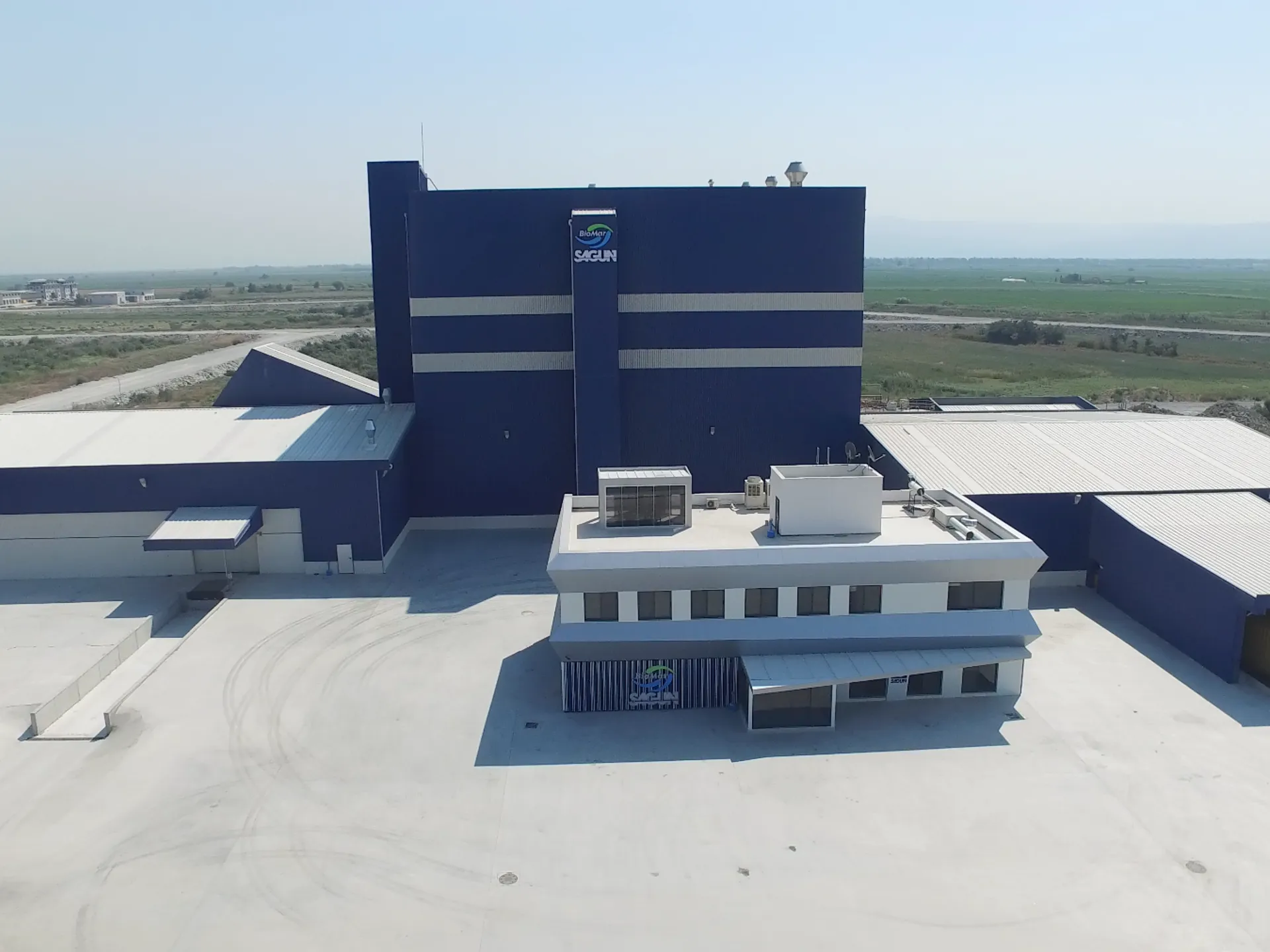
BioMar Sagun has achieved ASC Feed Certification, strengthening BioMar's ability to supply ASC-conforming feed solutions across the country and other…
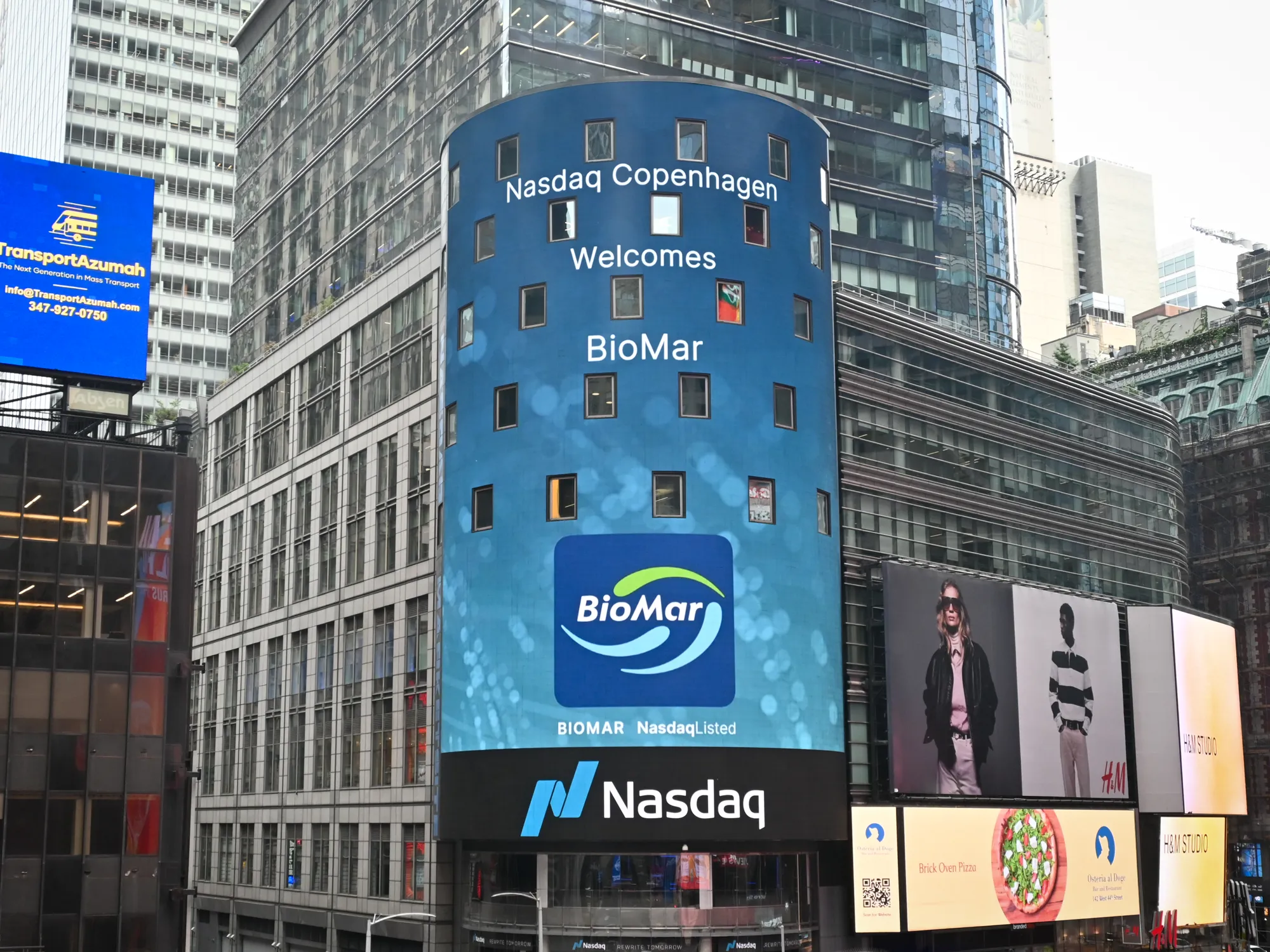
Last week, BioMar officially began trading on Nasdaq Copenhagen, marking a significant milestone in the company's history and welcoming more than…
This study, led by Anne Kristine Hansen, examines how dietary vitamin D level and form affect growth, welfare, and product quality across different…
This study, led by Jeleel Agboola and Keke Zheng, investigates how different proportions of digestible protein, lipid, and starch at a constant…
This study, led by Keke Zheng and Anne Kristine Hansen, explores how targeted adjustments in dietary protein, lipid, and omega-3 fatty acids affect…