
- R&D
- Nutrition
Functional Additives Reduce Mortality in European Sea Bass Across Controlled and Farm Conditions
Bacterial infections caused by Photobacterium damselae subsp. piscicida (PDP) continue to…

In the heart of BioMar work are our process operators. They are the ones safeguarding quality and controlling that the process is adjusted to ensure the optimal match between ever-changing raw materials, recipes and production conditions. Julie Bringedal likes this job.

“From the outside the production process in BioMar might seem very straightforward and automated. But as I see it every tomorrow is a new challenge; two days are never the same and employees in the production are expected to take responsibility and solve a wide range of technical problems,” says Julie Bringedal.
When Julie entered the production at BioMar in Karmøy, Norway, for the first time in 2007 it was to experience that this would not be a place where she could just lean back and enjoy an easy life.
“I started as an apprentice as a part of my education for being a technician within chemistry and processes. It really took me some time to just understand the main processes. At some points I actually doubted if it would be possible to learn the whole process flow within my two-year training period”, explains Julie.
“I have been here since 2007, and I continue to be challenged. After my training period, I was employed as process operator and have been in an interim position as team leader. And after taking maternity leave, I came back to my old team on part-time basis”.
“Actually, if I should give any advice to a candidate when he or she considers working in the production in BioMar: This job requires that you are ready to take responsibility, are prepared to continuously learn and engage in finding solutions to everyday problems as well as more profound production challenges. If you are ready for this, then BioMar is the place where you will find job security, strong cooperation and colleagues that are more than just a working relationship”, concludes Julie Bringedal.
Bacterial infections caused by Photobacterium damselae subsp. piscicida (PDP) continue to…

BioMar announces that it has acquired the remaining 30% shares in BioMar Ecuador. At the same time, BioMar Ecuador expects to expand the production…

At BioMar we understand that the journey to exceptional seafood begins long before it reaches the table, it starts with the feed that nourishes fish…
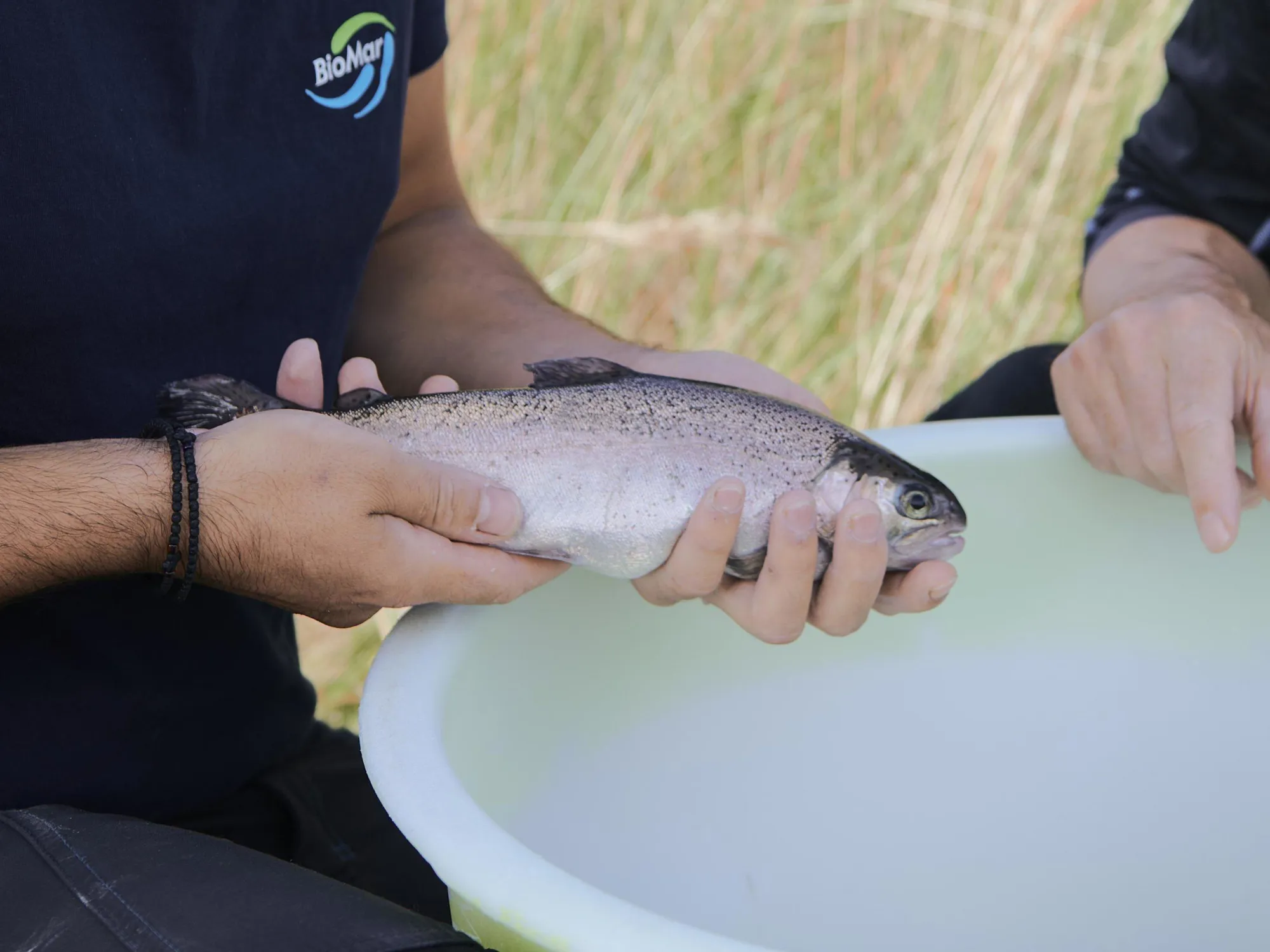
Efficient nutrient transfer from feed to fillet remains a key goal in sustainable aquaculture, particularly for micronutrients like vitamin D3 that…

BioMar has obtained ASC Feed Certification for its production facility in Nersac, France. As a key site producing feed for all life stages, including…

Mechanical delousing and other handling procedures are known to trigger acute stress in Atlantic salmon (Salmo salar), leading to reduced appetite,…

Fish protein hydrolysates (FPH) are known to improve nutrient availability and immune function in early-stage fish. Their high content and mix of…

Cefetra, a leader in agricultural supply chains, and BioMar, a global producer of aquaculture feed, have formed a new partnership to reduce emissions…

BioMar’s SmartCare programme is a range of globally proven functional solutions for aquaculture species that helps fish farmers tackle daily…

On the opening day of the Global Shrimp Forum, BioMar, Innovafeed, and Auchan are proud to announce a significant industry commitment: the large-scale…

In today’s aquaculture, increasingly focused on efficiency, resilience, and the responsible use of resources, land animal by-products, known as LAPs,…

Today at AquaNor BioMar launched POWER H2O, a new feed solution tailored for waterborne feeding systems. This new way of formulating gives salmon…