- R&D
Balancing Energy and Amino Acids for Shrimp Across Culture Temperatures
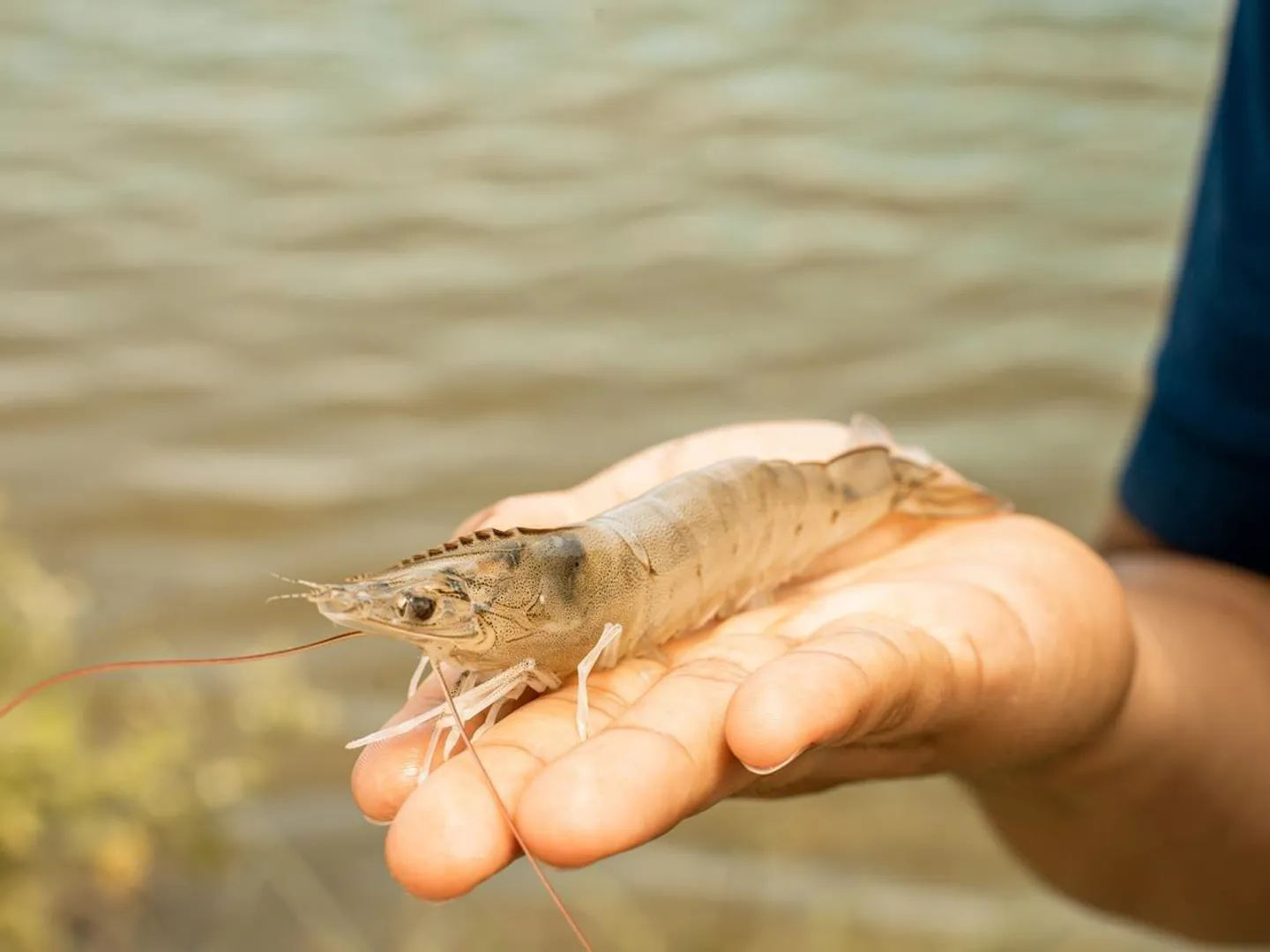
This study, led by Jeleel Agboola and Keke Zheng, investigates how different proportions of digestible protein, lipid, and starch at a constant…

Vitamin D is essential for fish and a major driver of the nutritional value of salmon and trout for human consumers. As salmonid diets have shifted from marine to plant-based formulations, dietary vitamin D levels have declined, and fish reared in land-based or shielded sea systems with limited sunlight access show further reductions. This study, led by Anne Kristine Hansen, examines how dietary vitamin D level and form affect growth, welfare, and product quality across different production systems in rainbow trout and Atlantic salmon.
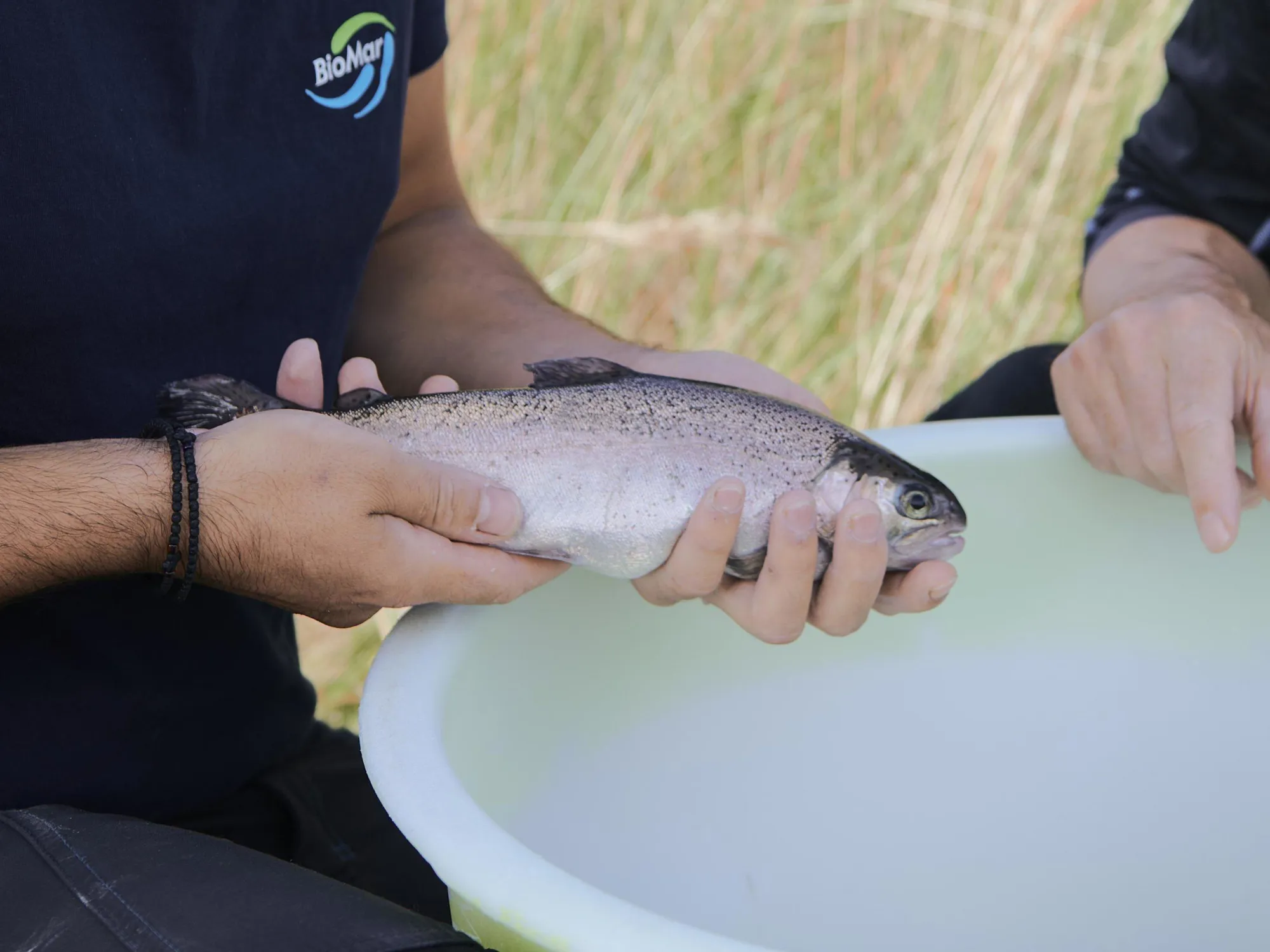
Two trials were conducted. Rainbow trout (initial weight 206 g) were reared for nine weeks in a recirculating aquaculture system at the BioMar ATC in Hirtshals, Denmark, with diets containing increasing levels of synthetic vitamin D3 from 8,000 to 85,000 IU/kg. Atlantic salmon (initial weight 1,393 g) were grown for nine months in semi-commercial sea cages at LetSea, Norway, with five diets formulated on a basal D3 level of 137.5 µg/kg: a low D3 diet (+0 µg/kg), a high D3 diet (+1,000 µg/kg), two diets with active metabolites (+200 and +600 µg/kg), and one diet with intermediate metabolite (+1.25 µg/kg). The seawater trial included three handling events to mimic mechanical sea lice operations.
Growth Performance
In rainbow trout, dietary vitamin D3 showed a positive dose-response relationship with fish growth. In Atlantic salmon, supplementation with higher levels of the active metabolite was associated with a negative impact on growth, while D3 supplementation alone did not affect growth performance.
Fillet Vitamin D3 Deposition
Fillet D3 content increased with dietary D3 levels in both species. In trout, the effect was strong and dose-dependent across the full range tested. In salmon, fillet D3 increased with higher D3 inclusion, combining dietary D3 with active and intermediete metabolite for A. salmon favoured NQC D3 accumulation at low D3, especially the active metabolite at high levels and from December to March.
Pigmentation
A positive correlation was observed between dietary D3 levels and fillet redness in rainbow trout. In Atlantic salmon, no effect on pigmentation was observed with increasing D3 levels, but a negative impact was noted in groups receiving higher active metabolite supplementation.
Welfare and Harvest Quality
A range of welfare and harvest quality parameters were monitored across both trials. No clear negative effects were observed at the dietary levels tested, supporting the safety of higher D3 inclusion within current EU regulatory limits.
The findings show that fillet vitamin D3 levels can be increased through feed formulation in both rainbow trout and Atlantic salmon, supporting strategies that improve the nutritional value of farmed fish for consumers. The performance and pigmentation response, however, depends on species, fish size, and production system. Supplementation with active metabolites in particular requires careful management in seawater cages, where higher levels affected both growth and pigmentation. As land-based and shielded production systems expand, vitamin D becomes a more relevant nutrient to manage actively in aquafeeds, both for fish welfare and for the nutritional quality of the final product.

Anne Kristine Grostøl Hansen is a Senior Scientist at BioMar Global R&D in Trondheim, Norway. She serves as Lead for the Fish Team, where she guides and coordinates scientific activities across all non-salmonid fish species, ensuring alignment with strategic priorities and business needs. Her research spans a broad range of topics, including the optimization of fish nutrition, as well as flesh quality and pigmentation.

Pedro Gómez Requeni is Senior Scientist at BioMar Global R&D in Brande, Denmark. He leads the Hatch & Fry Team, focused on developing high-quality diets for larvae, early-stage fish, and broodstock across all fish species and shrimp. In this role, he plays a pivot role in steering scientific efforts and ensuring research aligns with strategic and business objectives. His work covers nutrition, raw material quality, and pellet physical properties, with a strong focus on improving growth, skeletal development, and reproductive performance.
This study, led by Jeleel Agboola and Keke Zheng, investigates how different proportions of digestible protein, lipid, and starch at a constant…

This study, led by Keke Zheng and Anne Kristine Hansen, explores how targeted adjustments in dietary protein, lipid, and omega-3 fatty acids affect…

Bacterial infections caused by Photobacterium damselae subsp. piscicida (PDP) continue to…
Efficient nutrient transfer from feed to fillet remains a key goal in sustainable aquaculture, particularly for micronutrients like vitamin D3 that…